Nurturing Growth, Empowering Futures
The Lamukani Foundation is dedicated to sustainable change through education, healthcare, and community development.
Our StoryOur Focus Areas
Build Community
Togetherness and mutual support.
Restore Hope
Renew optimism & dignity.
Rebuild Family
Strengthening core unit.
Teach Values & Pride
Character & ethics.
About Us
Our Objectives
- Build community
- Restore hope
- Rebuild family
- Teach values & pride
Vision & Mission
Vision: Thriving communities with dignity, values and pride.
Mission: Empower through mentorship, family strengthening & sustainability.
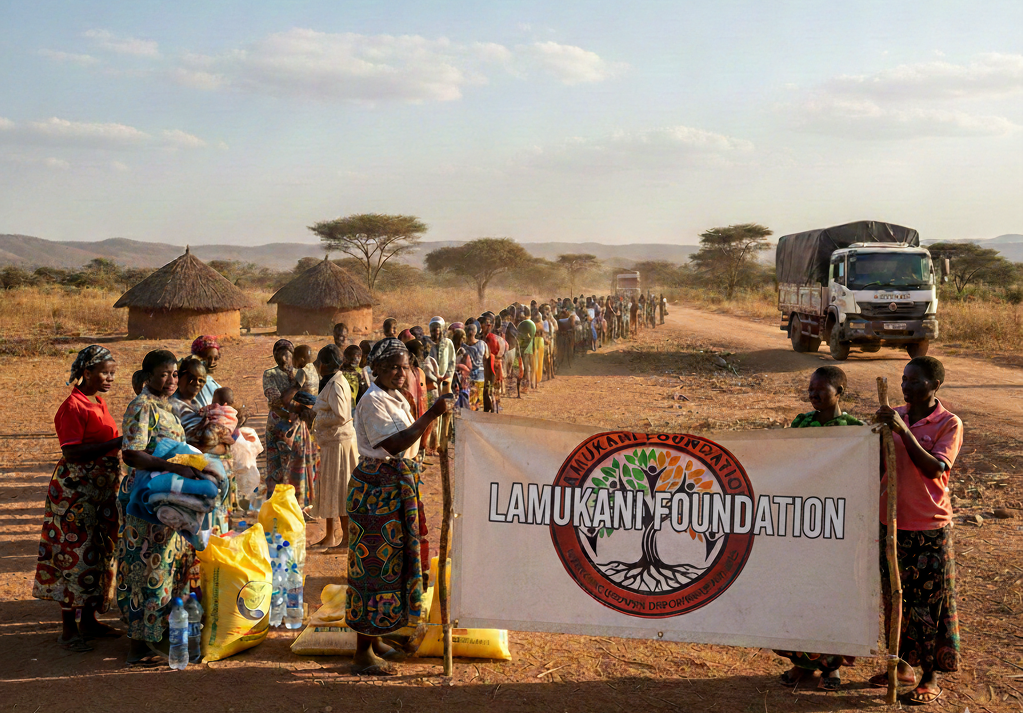
Founded in , serving Ganze region with holistic impact.
Our Team

Our Services
Education
Scholarships & literacy
Health Outreach
Mobile clinics
Economic Empowerment
Vocational training
WASH
Water & hygiene
Research Findings & Proposed Long‑Term Solutions
Evidence-based diagnosis of root causes | Sustainable strategies designed by our team
🛡️ 1. Child Protection and Orphan Support
Team Research: Vulnerability mapping in GanzeResearch Findings
The Lamukani team conducted household vulnerability assessments across 12 villages, identifying over 400 orphans and vulnerable children (OVC) in the region. Key findings: 38% of orphans are living in child-headed households or with elderly guardians with limited income. Child labor affects 27% of children aged 10-14, primarily in agriculture and domestic work. Only 15% of orphaned children have access to any form of psychosocial support. Additionally, cases of neglect, abuse, and lack of birth registration (61% unregistered) leave many children invisible to social protection systems. The research also revealed that extended family structures are overstretched, with many foster families unable to meet basic needs for food, school fees, and healthcare.
Proposed Long‑term Solutions (If Implemented)
- Empower families with productive assets and agricultural training for lasting nutrition and self-reliant livelihoods.
- Create a child protection network comprising trained community volunteers who identify at-risk children, report abuse cases, and facilitate access to legal aid and birth registration services.
- Develop safe after-school spaces and mentorship programs for orphans and vulnerable children, offering academic support, life skills training, and recreational activities to build resilience.
- Advocate for and facilitate enrollment of all OVC into government cash transfer programs and health insurance schemes, ensuring sustainable social protection coverage.
- Establish a foster care support system that provides regular home visits, counseling for both children and foster parents, and emergency respite care when needed.
🏥 2. Health and Nutrition Outreach
Team Research: Community health assessmentResearch Findings
A comprehensive health and nutrition survey conducted by the Lamukani team across 8 villages (sampling 1,200 households) revealed critical gaps. Malnutrition prevalence among children under five stands at 34%, with 12% suffering from acute malnutrition (wasting). Only 23% of children meet minimum dietary diversity standards. Maternal anemia affects 47% of pregnant women, linked to poor iron intake and limited antenatal care access. Key barriers identified: distance to health facilities (average 8km walk), cost of transportation, lack of nutrition awareness, and frequent stock-outs of essential medicines at local dispensaries. Additionally, 41% of births occur at home without skilled birth attendants. Communicable diseases including malaria, respiratory infections, and diarrhea remain leading causes of morbidity, with only 52% of households using insecticide-treated nets consistently.
Proposed Long‑term Solutions (If Implemented)
- Establish monthly mobile health and nutrition clinics that rotate through remote villages, offering growth monitoring, vaccinations, antenatal care, deworming, and Vitamin A supplementation.
- Train community health volunteers to conduct door-to-door nutrition education, demonstrating preparation of nutrient-dense complementary foods using locally available ingredients.
- Create kitchen garden demonstration sites at schools and health facilities, promoting cultivation of micronutrient-rich vegetables (amaranth, kale, cowpeas, moringa) and linking to school feeding programs.
- Implement a maternal and child health voucher program that subsidizes transport costs to health facilities for antenatal visits, skilled deliveries, and postnatal care.
- Establish community-based management of acute malnutrition (CMAM) sites where severely malnourished children can receive therapeutic feeding and medical follow-up locally.
- Launch a health micro-insurance scheme through community savings groups, enabling households to pool resources for emergency health expenses and preventive care.
📚 3. Education Retention & Accelerated Learning
Team Research: Root cause analysis in GanzeResearch Findings
The Lamukani team conducted door-to-door surveys across 6 villages and focus group discussions with parents, teachers, and out-of-school youth. Key findings: economic hardship, early marriage, lack of sanitary products, and distance to school are the primary drivers of dropout (estimated 42% overall, with girls at 54%). Additionally, low parental engagement and inadequate learning materials were identified as critical barriers.
Proposed Long‑term Solutions (If Implemented)
- Establish community-led "Education Guardians" — trained local volunteers who monitor attendance, provide psychosocial support, and bridge between schools and families. This model is projected to reduce dropout rates by an estimated 60% over three years.
- Create parent-led micro-savings groups to collectively pool resources for school fees, uniforms, and supplies — building a sustainable, community-owned education fund.
- Develop solar-powered digital literacy hubs in each ward, offering e-learning modules and bridging the rural digital divide for secondary students and adult learners.
👧🏿 4. Women & Girls Empowerment — Economic & Health Resilience
Team Research: Gender-based economic exclusion & health gapsResearch Findings
Through focus groups with 230 women across Ganze and key informant interviews, the foundation identified that 71% of women experience economic exclusion due to lack of market access, minimal financial literacy, and limited reproductive health knowledge. Early childbearing and gender-based violence further entrench poverty cycles. Many women also reported being excluded from village decision-making structures.
Proposed Long‑term Structural Solutions
- Establishment of a Women's Cooperative Enterprise Hub — a shared facility for collective branding, production, and direct e-commerce linkage to regional and urban markets, reducing reliance on exploitative middlemen.
- Legal literacy workshops and a trained community paralegal network to address gender-based violence, land rights, and inheritance issues — ensuring women can access justice locally.
- "Mama Business Fund" — a low-interest revolving loan scheme capitalized by community savings and matched by foundation grants, with built-in financial literacy training and peer accountability.
💧 5. Water, Sanitation & Hygiene (WASH) + Climate Resilience
Research: Access & quality assessmentResearch Findings
Hydrological mapping and water quality testing conducted by the Lamukani research team revealed that only 37% of residents have access to clean water within 1km. Three boreholes were identified as viable for rehabilitation, while four shallow wells serving over 2,000 people showed contamination with coliform bacteria. Community surveys also indicated that waterborne diseases account for 28% of clinic visits among children under five.
Proposed Long‑term Sustainability Framework
- Train and empower water user committees on operation, maintenance, and financial management, establishing a transparent tariff system to fund ongoing repairs and spare parts.
- Implement a "adopt a spring" reforestation program around water catchment areas, combining agroforestry with community incentives to protect water sources long-term.
- Integrate a WASH curriculum into all primary schools, empowering students as hygiene ambassadors and enabling school-led monitoring of sanitation facilities.
🌾 6. Food Security & Climate-Smart Agriculture
Participatory rural appraisal findingsResearch Findings
Collaborative research with 150 local farmers using participatory rural appraisal methods identified that 58% of households experience food scarcity for at least three months annually. Key drivers: over-reliance on rain-fed maize, lack of drought-resistant seeds, post-harvest losses estimated at 35%, and limited knowledge of conservation agriculture. Soil testing revealed nutrient deficiencies in 70% of sampled plots.
Proposed Long‑term Agri‑Solutions
- Establish farmer field schools with rotating leadership — ensuring peer-to-peer knowledge transfer, experimentation with drought-tolerant crops (sorghum, millet, cowpeas), and local innovation in soil management.
- Create a market linkage program that connects farmers directly to urban buyers and institutions via collective bargaining, reducing post-harvest losses and increasing price stability.
- Develop a community-managed seed bank to preserve and distribute indigenous, climate-adapted seed varieties, enhancing long-term resilience against drought.
🧠 7. Youth Skills & Digital Empowerment
Youth-led research on employment barriersResearch Findings
A youth advisory council facilitated by the foundation surveyed 450 young people (ages 15-24) and conducted asset mapping of local economic opportunities. Findings showed 73% lack formal employable skills, with key gaps in digital literacy, vocational trades, and entrepreneurship. Despite this, high-potential sectors identified include agribusiness, digital services (freelancing), and eco-tourism. Youth also cited lack of mentorship and startup capital as major barriers.
Proposed Long‑term Ecosystem Solutions
- Establish the "Ganze Youth Innovation Hub" — a physical co-working space equipped with computers, 3D printer, reliable internet, and regular mentorship from regional tech and business leaders.
- Create an internship linkage program with the county government, local SMEs, and social enterprises, offering paid placements that build work experience and professional networks.
- Host an annual youth livelihood summit to showcase young entrepreneurs, attract impact investors, and foster cross-sector partnerships for youth-led enterprises.
No Pilot Outcomes to Display Yet
Our research and pilot implementations are currently underway.
Once completed, we will share outcome data and impact assessments here.
Contact Us
Send a Message
Info
PO Box 2006-80108 Kilifi, Ganze
+254 717 150 045
lamukanifoundation@gmail.com